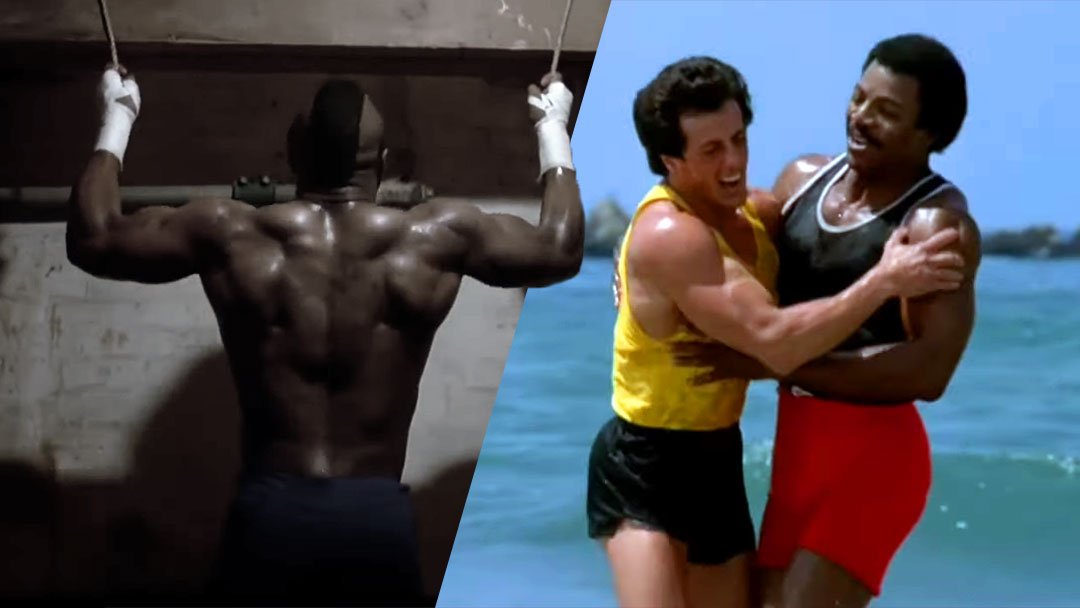
Two Fighters. Two Methods.
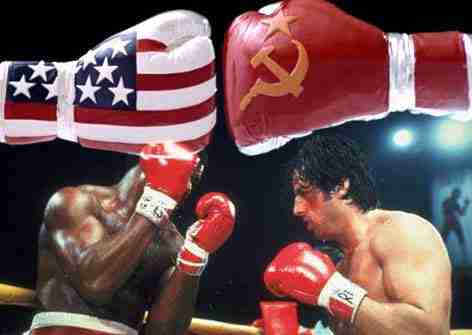
When people think of Rocky III, they think of Clubber Lang barking “I pity the fool” and Rocky sprinting through the surf in dolphin shorts. But beneath the catchphrases and the montages is something deeper — a full-blown clash of training ideologies. One fighter’s rebuilding his confidence through speed, rhythm, and grit. The other’s sharpening brute force in isolation, aiming to destroy whatever’s in front of him.
Rocky Balboa is the fallen champion. Clubber Lang is the storm coming for the crown. Their workouts don’t just prep them for the ring — they expose who they are. This is physical prep as character study, and it’s some of the most effective storytelling ever put on film.
Built for Real: The Grit Behind Rocky III’s Physiques
Both actors brought serious physical credibility to Rocky III. Sylvester Stallone trained like a machine — six days a week, dropping to an insanely lean 2.8% body fat. His diet was stripped to the basics: black coffee, tuna, and oatmeal cookies. Every punch, sprint, and sweat-drenched scene was earned.
Mr. T came in with natural power and real-world grit. A former bouncer and bodyguard, he built his 218-pound frame on old-school methods: push-ups, rope pull-ups, sit-ups, and light dumbbell work — no machines, no fluff. His look and energy on screen matched how he trained off it: raw, intense, and direct. The realism of these two guys grinding it out is a big reason why the movie still carries weight.
Rocky’s Training with Apollo Creed: Rebuilding the “Eye of the Tiger”
From Complacency to Comeback
Rocky may have looked like a champion going into Rocky III — lean, cut, and physically dominant — but mentally, he was unraveling. The loss of Mickey and a brutal knockout from Clubber Lang left him full of doubt, stripped of the confidence that once defined him.
Apollo Creed steps in to rebuild him from the inside out. He brings Rocky to “Tough Gym,” a gritty, inner-city boxing space filled with real fighters and no distractions. The interior scenes were filmed in Los Angeles, with real boxers cast as background talent to give it an authentic, lived-in feel.
Apollo’s training style focuses on what Rocky lost: speed, rhythm, and conditioning. Every drill is built around agility, stamina, and mental sharpness — the fundamentals of ring survival. This wasn’t aesthetic training; it was functional. Rocky needed to last rounds, move with purpose, and strike with timing. The workouts reflected that, and it shows in every frame.
Beach Sprints
In the film, Rocky and Apollo tear across California’s Santa Monica beach in tight bursts of high-speed sprinting, kicking up wet sand as they go. It looks cinematic, sure — but this sequence is grounded in real athletic science. Sprinting on sand is one of the most effective tools for developing explosive lower-body power and elite-level endurance.
Why? Because sand fights back. Every stride sinks, slips, and steals energy, forcing your muscles to generate more force with less return. That means your glutes, calves, quads, hamstrings, and core are firing constantly just to keep you upright and moving. The softer the surface, the harder your body has to work.
For Rocky, this training was about regaining his edge — speed, power, and mental toughness. He wasn’t just rebuilding his body. He was sharpening it to react, recover, and strike with precision. Apollo knew Rocky wouldn’t beat Clubber Lang in a slugfest. He had to be the faster fighter, the smarter mover, the guy with gas left in the tank after six brutal rounds.
And here’s what this kind of training does for you:
- Builds fast-twitch muscle fibers for explosive speed
- Boosts VO2 max and lung capacity
- Strengthens joints and connective tissue thanks to the reduced impact of sand
- Forces better balance and foot control — essential for sports, fighting, or just aging well
- Cranks your metabolism long after the workout ends
Also, because of the resistance, beach sprints can deliver serious strength and cardio gains in less time than flat-ground running. It’s no wonder top-tier athletes still use it to this day — it’s Creed-approved, and science-backed.
Footwork Drills
You see Rocky in the gym, side-stepping, pivoting, and shuffling like a welterweight — not the heavyweight brawler we saw in earlier films. This shift is intentional. Apollo’s training is about finesse and movement, not just brute force.
Footwork drills like these build agility, coordination, and reactive speed. In boxing, your feet are your defense. Good footwork lets you slip punches, create angles, and control the ring. It’s not just about moving — it’s about moving with purpose.
For Rocky, these drills are the antidote to his flat-footed loss against Clubber. For you, the benefits go beyond the ring: better balance, quicker reaction times, and stronger hips and ankles. It’s one of the most underrated forms of athletic training — and a key reason why Rocky gets his edge back.
Jump Rope
This drill hones foot speed, timing, and cardiovascular stamina. It builds rhythm, which translates directly to punching cadence and defensive movement. By the end, Rocky’s snapping that rope in perfect sync, lighter on his feet and sharper upstairs. For anyone training today, jumping rope boosts coordination, burns calories fast, and strengthens calves, shoulders, and your fighter’s mindset — all in one movement.
Shadow Boxing
In front of the mirror, Rocky isn’t just throwing punches — he’s rewiring his brain. This scene shows Apollo shadowing Rocky’s every move, tightening up his stance, sharpening his head movement, and forcing him to think before he swings.
Shadow boxing is how fighters build muscle memory and flow. It’s not about power — it’s about precision, rhythm, and self-correction. For Rocky, it’s a mental reset. For anyone training solo, it’s a drill that improves form, timing, and control. You see every flaw, every twitch — and you fix it in real time.
Speed Bag
By the time Rocky’s hammering the speed bag, you can see his confidence coming back. This drill is all about fast hands, timing, and non-stop shoulder endurance — crucial for keeping your guard up round after round.
What makes this scene hit harder is that Stallone actually trained for it. He didn’t fake the rhythm or speed — he earned it. His coordination and precision on that bag are the result of serious reps in the gym. For any fighter or athlete, working the speed bag sharpens reflexes, boosts hand-eye coordination, and conditions the upper body without burning you out.
Double-End Bag
The double-end bag is all about reaction time — and Rocky needs it now more than ever. As that elastic bag snaps back and forth, he’s training to strike with precision and dodge on instinct. This isn’t brute force — it’s finesse under pressure. Against a wild puncher like Clubber Lang, this drill teaches Rocky to stay sharp, stay centered, and punish openings without getting clipped.
Pad Work
With Apollo calling out combinations and holding the mitts, Rocky is forced to think fast and punch sharper. Pad work builds precision, timing, and ring awareness — it simulates real fight conditions without the damage. Every pop of leather is a test: can Rocky stay focused, stay fluid, and deliver under pressure? By the end, he’s not just reacting — he’s flowing.
Swimming
This is the only time in the entire franchise we see the Rock doing pool work — a deliberate shift that signals how different this training camp really is. Swimming laps builds cardiovascular endurance while demanding continuous upper-body engagement, especially from the shoulders and lats. It also hits the core and legs, all while minimizing joint stress thanks to the water’s buoyancy.
And of course, he yanks Paulie into the pool — much to Adrian’s delight. It’s a brief flash of levity in the middle of a brutal training camp, and a reminder that Rocky’s rebuilding isn’t just physical — it’s emotional too.
Clubber Lang’s Solo Training: Raw Power and Ruthless Intensity
Clubber Lang doesn’t train for endurance or technique — he trains for destruction. His workouts are brutal and basic: incline sit-ups, rope pull-ups, and heavy bag beatdowns. There’s no team, no coaching, just raw effort in a sweatbox gym. That wasn’t a Hollywood invention either. Mr. T, who played Clubber, actually trained using bodyweight moves and light dumbbells, focusing on reps and intensity over heavy lifting.
The result was a dense, powerful frame built to overwhelm — exactly what appears on screen. While his training lacked polish, it delivered results: fast, aggressive, and structured to finish fights quickly.
Heavy Bag Punching
Clubber Lang’s training revolves around raw, punishing power. Nowhere is that more visible than in his work on the heavy bag. He doesn’t jab — he detonates.
Every hook and uppercut is thrown with knockout intent, loading the hips, engaging the core, and driving through the shoulders and back. From a fitness standpoint, heavy bag training like this builds explosive strength, anaerobic endurance, and fight-specific conditioning. It demands full-body engagement — legs for stability, core for rotation, and upper body for velocity and impact.
This kind of high-intensity power punching taxes the cardiovascular system fast, mimicking the energy dump of an early-round brawl. For Clubber, the mission is simple: generate enough force to end the fight in the first two rounds — and his heavy bag training is laser-focused on making that happen.
Incline Sit-Ups
Incline sit-ups hammer the rectus abdominis and obliques harder than standard crunches by increasing the range of motion and resistance.
For Clubber Lang, cranking out reps at speed builds the kind of dense, functional core that powers heavy punches and absorbs punishment. A strong midsection isn’t just for show — it’s essential for generating torque in every strike and taking hits without folding. This kind of core training directly translates to punch resistance and rotational power in the ring.
Pull-Ups
Clubber powers through pull-ups using what look like meat hooks bolted into the ceiling — an industrial setup that suits his intensity. Pull-ups build serious upper-body strength, especially in the lats, biceps, and forearms. That kind of back development generates torque for punches and reinforces the shoulders for durability in a fight. The grip strength required for these reps also carries over to clinch control and overall arm endurance.
Shadow Boxing in the Mirror
Clubber stares himself down, throwing wild punches. His version of shadow boxing is less about form and more about fury and psychological intensity.
Speed vs. Power: Comparing Rocky and Clubber’s Training Styles
Technique vs. Force
Rocky’s comeback training under Apollo centers on rhythm, footwork, timing, and body control — hallmarks of a technical boxer. He works on lateral movement, combination punching, and defensive drills designed to frustrate a power hitter.
Clubber, on the other hand, trains like a wrecking ball. His style favors brute force over form, relying on overwhelming strength and raw aggression. Rocky is taught to flow; Clubber trains to smash.
Stamina vs. Explosiveness
Rocky is built for the long haul — his conditioning drills (swimming, jump rope, sand sprints) are geared toward maintaining speed and sharpness deep into the later rounds. He’s pacing for a tactical battle (“Be a thinker, not a stinker!”).
Clubber’s approach is the opposite: explosive power with short bursts of violence. His body is tuned to unload damage early and often. That kind of anaerobic conditioning burns fast — and if the fight drags on, so does he.
Mental Growth vs. Mental Fire
At the start of Rocky III, Rocky is shaken — he’s grieving, doubting himself, stuck in his own head. Apollo’s training isn’t just physical; it rebuilds his identity. Clubber, by contrast, starts intense and stays there. He’s driven, focused, but emotionally rigid. No arc, no evolution. That lack of adaptability becomes a liability once his game plan starts to fail.
Environment: Team vs. Solitude
Rocky trains with a squad: Apollo, Duke, even Adrian in his corner. There’s camaraderie, accountability, and a structured system. Clubber isolates himself — alone in his training room, echoing with rage and determination.
While solitude can sharpen focus, it lacks feedback. There’s no one to refine your technique or adjust your approach when things go sideways.
Realism and Impact
These training styles aren’t just cinematic opposites — they mirror real boxing philosophies.
Rocky’s evolution under Apollo closely mirrors Muhammad Ali’s style: slick footwork, quick combinations, and strategic movement. In contrast, Clubber’s brute force and early-round knockouts resemble heavy hitters like George Foreman or Sonny Liston. Throughout boxing history, strategy and conditioning have consistently proven more effective than raw power — especially when the fight stretches into the later rounds.
Character Reflections
Rocky transforms. He embraces change, learns from Apollo, and finds a new gear.
Clubber doesn’t evolve — he doubles down on aggression. This contrast isn’t just dramatic; it defines the outcome. Rocky adapts and wins. Clubber burns hot and flames out. The training montages don’t just show workouts — they reveal everything you need to know about who these guys are.
Why the Rocky III Training Montages Matter
The training in Rocky III is remembered because it reflects reality — not fantasy. From sprinting through sand to pounding the heavy bag, every movement ties back to how real fighters train and condition their bodies. These sequences show what happens when purpose meets pressure: you get sharper, stronger, and harder to break.
For anyone chasing fitness today, there’s a clear message. Speed work builds lungs and legs. Core training builds power and resilience. Drills like jump rope, pad work, and swimming aren’t just cinematic — they’re smart.
Whether you’re prepping for a fight or just looking to train with more edge, the path hasn’t changed much since 1982. The body responds to effort. The mind follows discipline. That’s what makes these montages more than movie scenes — they’re a reminder that greatness is earned, not edited.