The Little Black Ball That Defined Rocky Balboa
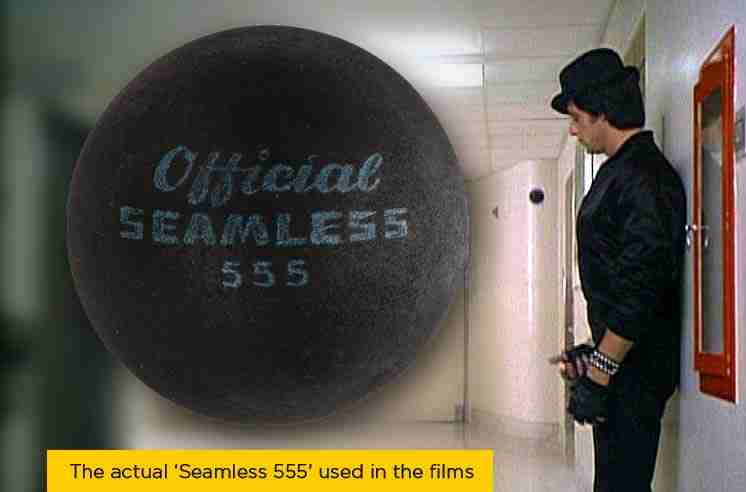
Thanks to Sylvester Stallone’s massive 2016 auction of over 1,000 pieces of Rocky memorabilia, fans got a deeper look into the details of Rocky Balboa’s world—including the little black rubber ball that became one of the Italian Stallion’s most iconic props.
First appearing in Rocky (1976), this simple handball was a constant companion, always in Rocky’s hands as he walked the streets of Philadelphia. It appears in every single movie in the Rocky and Creed franchise—except for Rocky IV. Whether bouncing it to clear his mind, steady his nerves, or focus before a fight, the ball was always in motion, reflecting what was happening inside him.
“It’s the only thing that [Rocky] really had that would take his mind off of his problems,” Stallone explained. “He’d be bouncin’ the ball, almost in a meditative state, so it became part of his persona. And they don’t even make these kind of balls anymore—they’re impossible to find today, so it’s a piece of history now.”
But the ball wasn’t just for stress relief. It also played a mental and physical role in Rocky’s training—a tool to toughen his mind and hands in a way that made sense for a street-tough fighter.
Bouncing On-Screen: Where the Ball Appears in the Rocky Series
Rocky’s black rubber ball makes multiple appearances across the franchise, often during some of his most reflective moments.
Rocky – A Constant Companion
The first time we see the ball is in the very first scene of the original Rocky—walking home after his fight with Spider Rico. From that moment on, it becomes a natural extension of who he is, always in his hand as he wanders the streets of Philly. Rocky is a man completely alone, isolated in his world, with only that little ball for company.
But the ball isn’t just something to fidget with—it’s a reflection of his emotions in different moments.
After getting chewed out by Mr. Gazzo for not breaking a guy’s thumbs, Rocky walks away, bouncing the ball. He doesn’t argue, doesn’t complain—he just lets the rhythmic bounce say everything. It’s his way of shaking it off, a silent act of defiance that says, “I do things my way.”
Later, we see a different side of him when he stops by Adrian’s pet shop during the day. Leaning on the glass, he rolls the ball along the window, playing with a little puppy inside. It’s a glimpse of his gentle, playful side, a stark contrast to the hardened fighter we just saw in the ring.
That night, when he visits Adrian again, the ball takes on a different role. This time, he’s nervous. As he works up the courage to ask her out, he rolls the ball across the countertop, letting it fill the silence as he searches for the right words. The same ball that once carried his loneliness now helps him bridge the gap between them.
In the original Rocky, the ball is more than just an accessory—it’s part of his identity. Whether he’s frustrated, playful, or nervous, it’s always moving with him, echoing what he feels inside.
Rocky II – Waiting for Adrian’s News & Emotions at Mick’s Gym
Rocky’s black ball is back in Rocky II, but this time, it’s not about training or toughness—it’s about nervous energy.
Outside the gynecologist’s office, he waits anxiously while Adrian gets the news in private. He paces the hallway, bouncing the ball as a way to burn off the tension. He doesn’t know what Adrian is hearing inside, and for a guy who can take punches all day, the uncertainty is unbearable.
When Adrian finally steps out and gives him the good news, his whole demeanor shifts. Relief washes over him, and as they walk home together, he keeps bouncing the ball—but this time, it’s lighthearted, playful. It’s the same motion, but now it reflects his joy instead of stress, showing how deeply his emotions are tied to this simple object.
But not every moment with the ball in Rocky 2 is about anticipation or happiness. After being mocked at Mighty Mick’s Gym, Rocky takes refuge in the dingy bathroom, bouncing the ball. The fighters in the gym laugh at him, treating him like a washed-up has-been. On the surface, Rocky acts like it doesn’t faze him—he smirks, shrugs it off, plays it cool. But behind closed doors, in the grimy, dimly lit stall, he bounces the ball with a different energy—controlled, but boiling inside.
The ball absorbs his frustration, giving him something to focus on instead of reacting. He won’t let them see him mad. He won’t give them the satisfaction. But the way he bounces the ball, firm and steady, shows the fight still burns in him.
In Rocky II, the black ball isn’t just a prop—it’s an extension of Rocky’s emotions. Whether he’s burning off nervous excitement, channeling frustration, or expressing quiet joy, it’s always there, bouncing along with his feelings.
Rocky III – A Fighter Lost in His Own Mind
In Rocky III, the black ball makes a brief but telling appearance. After losing to Clubber Lang and the devastating death of Mickey, Rocky heads to Los Angeles to train with Apollo Creed at Creed’s old gym. But his heart isn’t in it. The loss shakes him to his core—he let Mickey die, he lost the title, and now he’s questioning if he was ever really the champion he thought he was.
During one training session, Rocky bounces the black ball inside the boxing ring, shifting it between his hands while Apollo shouts instructions – “Think smooth, bounce, bounce, bounce.”
Tony “Duke” Evers looks on disapprovingly—he can see it. Apollo can see it. Rocky isn’t locked in. His mind is somewhere else.
What Rocky doesn’t realize yet is that this kind of hand-eye training actually has merit—just not the way he’s using it. In real life, tools like the reflex ball—a small ball attached to an elastic headband—are sometimes used to sharpen timing, accuracy, and reaction speed. Oleksandr Usyk is a champion of this novelty boxing gadget, natch. Unlike Rocky, who bounces his ball without purpose, elite fighters use reflex training to keep their hands fast and their minds engaged.
Rocky’s ball, once his constant companion, now reflects his disconnected state of mind. He’s going through the motions, but he’s not fighting for anything—yet. It isn’t until Apollo pushes him harder, and until Rocky confronts his fears, that he finally wakes up and starts training with real focus.
Rocky V – Returning to His Roots
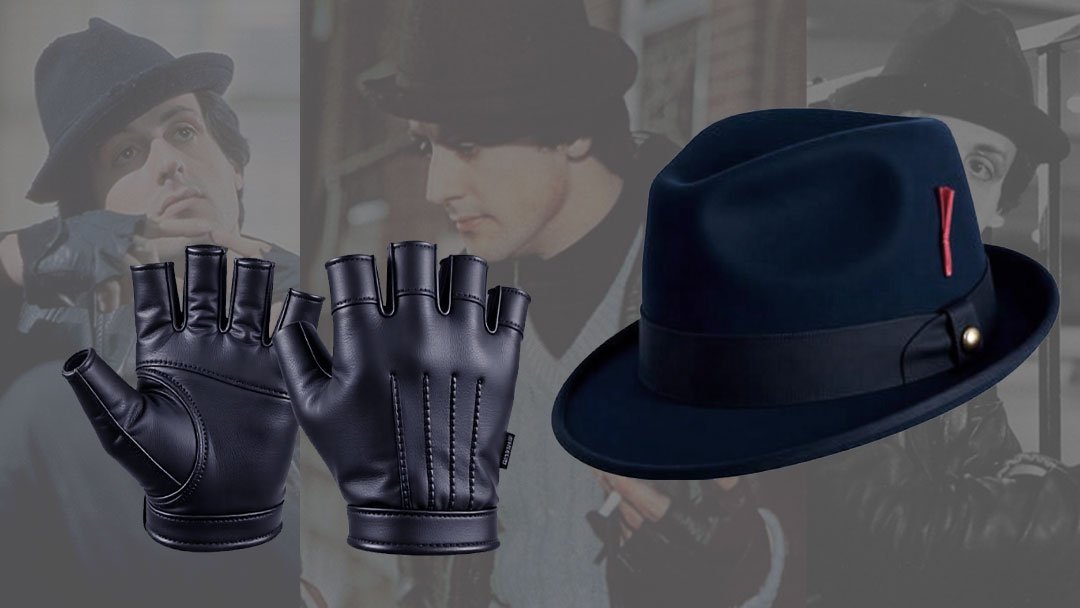
The black ball briefly reappears in Rocky V, a small but meaningful detail that ties Rocky back to his roots. It was likely pulled from that trunk in the attic, along with his fedora, jacket, and fingerless gloves. The ball represents who he was before the fame and fortune.
You’ll catch a quick glimpse when Rocky walks home after dropping off Robert at school, rolling the ball between his fingers. Later, when he meets Tommy Gunn outside Mickey’s Gym, he bounces it absentmindedly—a quiet sign that he’s back in his comfort zone.
The last time we see it is during Rocky’s conversation with George Washington Duke. The flashy promoter tries to sell him on a comeback, but Rocky just tosses the ball in the air. When Duke says, “Only in America do we get these kinds of opportunities,” Rocky barely reacts. It’s a subtle moment, but one that speaks volumes—he isn’t as naive as he once was.
Rocky Balboa – A Fighter’s Mental Training
Then, in Rocky Balboa (2006), the ball makes another appearance—this time in a scene that didn’t make the final cut. This important moment reveals one of the best insights into Rocky’s mindset.
Rocky is outside Adrian’s Restaurant, talking to Little Marie’s son, Steps. As they chat, he explains why he always bounced the ball. It wasn’t just a habit. It was part of his training—not just for boxing, but for life.
“I think workin’ hard makes your head strong,” Rocky tells Steps. “You know like, when I was a kid, I’d stare up at these street lights for like 30 minutes and try not to blink. Or I’d be squeezin’ a ball until I thought my hand was gonna explode. I was teachin’ myself to be uncomfortable—’cause I knew bein’ uncomfortable might come in handy someday like when I was in the ring and such.”
This moment shows that mental toughness mattered as much as physical strength. The ball wasn’t just a fidget spinner. It was a tool to push himself past discomfort, training his mind to handle pressure, pain, and exhaustion.
The scene was ultimately cut, but it adds new depth to Rocky’s character. Even outside the ring, he was always training for the next challenge.
Creed – A Quiet Battle Begins
The black ball returns in Creed (2015), but this time, Rocky isn’t waiting for a fight—he’s waiting for test results that will change his life. Standing in the doctor’s office, he bounces the ball rhythmically, his focus locked on the movement. It’s the same nervous energy we’ve seen before, the same way he’s always kept his emotions in check, but this moment is different.
For the first time, the fight isn’t in the ring—it’s inside him. The doctor delivers the news: cancer. Rocky doesn’t react with anger or fear. He just keeps bouncing the ball, as if the simple, steady motion can hold back the reality of what he’s just heard.
In Creed, the ball isn’t about training, nerves, or habit. It’s about control—the last thing Rocky has left to hold onto in a moment where his body is failing him.
Creed II – Rocky’s Full-Circle Moment
The black ball makes its final appearance in Creed II in one of the most meaningful moments of the franchise.
After Adonis’ victory over Viktor Drago, Rocky quietly steps away from the celebration. He travels to Vancouver to visit his estranged son, Robert. They haven’t seen each other in years. A quiet uncertainty lingers as Rocky arrives at Robert’s doorstep.
As he stands there, taking in the moment, his grandson, Logan Balboa, notices the familiar black ball in Rocky’s hand.
“Is that a ball?” Logan asks.
Rocky nods and replies, “Yeah, wanna play catch?”
This moment isn’t just nostalgic—it’s symbolic. For decades, the ball represented Rocky’s solitude. He bounced it through the streets of Philly, lost in thought, using it to center himself when life got tough. Now, it finally serves a new purpose.
Instead of a distraction, the ball becomes a connection. Rocky bridges the gap between past and present, sharing a piece of himself with his grandson.
It’s a quiet but deliberate moment, marking Rocky’s shift from fighter to family man. What once symbolized his isolation now represents reconnection.
The Real-Life History of Rocky’s Black Ball
The black ball Rocky used on screen wasn’t just a random prop—it was a real vintage handball manufactured by a Connecticut-based rubber company that has long since gone out of business. These balls date back to the early 20th century and were once the official handballs of the Amateur Handball Union (AHU), which later became the United States Handball Association (USHA). The particular ball used in the original Rocky (1976) was from the 1960s, making it a true relic of its era.
Stallone’s screen-used ball was auctioned in 2016 for $32,500, making it one of the most recognizable and valuable props from the Rocky franchise.
The reason these balls are so tough to find today is simple—they don’t make ’em anymore. Unlike modern handballs, which are designed for competitive sports, the old-school rubber models were known for their dense construction and durability, which is why surviving vintage ones are highly sought after by collectors.
Modern handballs can vary slightly in size and color, and black models are especially rare today. Most handballs used in competitive play are designed in brighter colors, making the black of Rocky’s ball even harder to come by. Some people mistake racquetballs or tennis balls for Rocky’s black ball, but racquetballs are much larger, and tennis balls are even a tad bigger with a completely different feel. In reality, Rocky’s handball is closer in size to a golf ball, making it compact enough to hide comfortably in the palm of his hand while still having the weight and density for a satisfying bounce.
How Rocky’s Black Ball Strengthens the Mind & Hands
Rocky’s black handball wasn’t just an old-school fidget spinner—it had real training value. Fighters, athletes, and even everyday people could use a ball like this to build strength, focus, and coordination.
Grip Strength, Hand Endurance & Coordination
Bouncing, gripping, and catching a dense rubber ball builds hand strength, endurance, and reflexes. This is essential for boxers, martial artists, and anyone relying on grip power.
Unlike modern stress balls, which are soft and meant for light squeezing, Rocky’s ball required real force. That made it more effective for strength and coordination training.
Stress Relief & Mental Focus
The rhythmic motion of bouncing a ball creates a calming, meditative effect, similar to squeezing a stress ball.
It helps reduce tension, improve concentration, and keep the mind engaged. Whether preparing for a fight, working through stress, or staying focused, this simple motion makes a big difference.
Where to Get a Handball Like Rocky’s
Want to own a real vintage handball like the one Rocky used? Total Rocky is occasionally able to source vintage models similar to the one Rocky used, with a few variations, including:
- Screen-Accurate Model – Identical to the original, complete with its original printed logo and box.
- Street-Ready Model – The same style, but with the logo rubbed off and no box.
- Alternate 556 Model – A close lookalike from the same era.
👉 Want a vintage handball? Check availability here.
These handballs are rare, and availability is limited. If you’re looking for one, check back periodically as stock changes.
Final Thoughts: The Ball That Defined a Fighter
More than just a prop, Rocky Balboa’s black ball represents mental strength, focus, and endurance—values at the core of his character. Whether bouncing through the streets of Philadelphia, using it to stay focused before a fight, or passing it down to his grandson in Creed II, the ball is a symbol of resilience—a reminder that sometimes, the simplest things can have the deepest meaning.