“Going in one more round when you don’t think you can—that’s what makes all the difference in your life.” – Rocky Balboa
When Rocky IV started filming in March 1985, it felt like a high school reunion for the cast and crew. Nearly a decade earlier, a small, low-budget film called Rocky changed Hollywood forever. That unknown actor? Sylvester Stallone.
Now, the challenge was different. They weren’t just making another sequel. They were creating the most action-packed, visually stunning entry in the series—one that would capture the Cold War’s tension inside the boxing ring.
The Making of Rocky 4: Stallone’s Vision for the Sequel
To bring Rocky IV to life, Stallone didn’t just direct—he crafted every detail. Filming took place in Jackson Hole, Wyoming (for the snowy Russian landscape), Vancouver, British Columbia (the Soviet boxing arena), and Las Vegas, Nevada (Apollo vs. Drago).
Unlike traditional sequels, Rocky IV leaned into intense visuals, fast-paced action, and powerful symbolism. Every frame had to feel larger-than-life—just like the Cold War stakes surrounding the film’s release.
Embed from Getty ImagesWhen Was Rocky 4 Made?
Principal photography began on March 18, 1985, and wrapped in July 1985. By Thanksgiving weekend, it was in theaters, becoming the highest-grossing sports movie of all time (until Creed arrived in 2015).
Building Rocky’s Body: Stallone’s Brutal Training
To play a version of Rocky that was tougher, stronger, and more battle-ready than ever, Stallone trained like a machine.
He started prepping during Rambo: First Blood Part II and, once filming wrapped, went straight into a grueling training program with world-class bodybuilder Franco Columbu.
The goal? Make Rocky look like a real-world superhero.
- Stallone added 10 pounds of muscle
- He increased his chest and biceps size
- His workouts were designed for maximum definition and power
Behind the Scenes Fact: The Rocky IV crew had a phrase—“pump and lube.” Before filming boxing scenes, Stallone would pump up his muscles, then get lubed with oil and water to create that iconic, glistening “battle sweat” effect.
Rocky 4 Behind the Scenes: Filming in the ‘Soviet Union’
Jackson Hole, Wyoming – Rocky’s Russian Training Camp
Wyoming stood in for Siberia, Russia, where Rocky trains in the most brutal, old-school way possible.
- Reality check: Temperatures dropped to -20°F with the wind chill.
- Snow was real, not movie magic. Crew members struggled to move through deep snow, and cameras froze constantly.
- Symbolism everywhere – Rocky trained with logs, sleds, and mountains, while Drago used machines, steroids, and Soviet tech.
Vancouver, British Columbia – The Soviet Boxing Arena
The climactic Rocky-Drago fight was filmed in Vancouver’s Agrodome Arena, transformed into a massive Soviet stadium.
- 10,000 extras filled the stands, wearing drab winter clothes for that authentic Soviet look.
- The venue had to seat 6,000+ people, while also fitting in massive production crews and ring setups.
- Vancouver was chosen after a worldwide search—it had the right look, size, and crowd availability.
Las Vegas, Nevada – Apollo vs. Drago’s Over-the-Top Spectacle
For pure contrast, Apollo Creed’s fight against Drago was filmed at the Ziegfeld Room in the MGM Grand.
- Temperatures soared to 120°F in the Nevada desert.
- Bright lights, Vegas showgirls, and flashy costumes made it the most extravagant Rocky fight ever filmed.
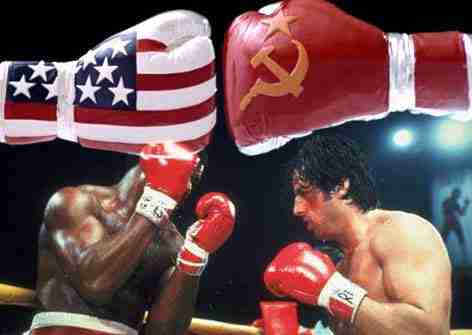
- This wasn’t just a match—it was an American vs. Soviet showdown wrapped in pure entertainment.
How Old Was Rocky in Rocky 4? (Stallone’s Age at Filming)
In Rocky IV, Balboa is a seasoned fighter, deep into his career. But how old was he?
Sylvester Stallone was 39 years old while filming, making Rocky somewhere around 38-40 in the film’s timeline. By this point, he was a battle-hardened warrior, not just an underdog anymore.
Rocky 4 Deleted Scenes: What Didn’t Make the Cut
Some scenes never made it into the final version:
- Rocky vs. the U.S. Boxing Board: Originally, a scene showed the boxing commission telling Rocky his fight against Drago wouldn’t be sanctioned. This was later cut, but hints remain in a newspaper montage before the press conference.
- More Apollo Funeral Footage: Additional emotional moments were trimmed to keep the pacing tight.
- Trailer Footage That Didn’t Make the Film: The original theatrical trailer contained shots not seen in the final cut.
Cinematography & Design: The Visuals of Rocky IV
Stallone wanted Rocky IV to look more epic and cinematic than any previous film.
Bill Butler – The Cinematographer Behind the Action
Bill Butler had already worked on Rocky II, Rocky III, Jaws, and One Flew Over the Cuckoo’s Nest. His goal?
- Capture Rocky’s training in a way that felt raw and punishing
- Make Drago’s training look cold, futuristic, and mechanical
- Use tight, intense shots for the final fight to make every punch feel real
Creating the Soviet Arena From Scratch
Production designer Bill Kenney had to imagine what a Soviet boxing stadium looked like—because real reference materials were limited.
The result? A massive, industrial-looking space, filled with giant propaganda banners, intense lighting, and a roaring Russian crowd.
Final Thoughts: The Legacy of the Making of Rocky IV
Rocky IV was more than just another sequel—it was a Cold War-era sports spectacle. The combination of its intense training montages, larger-than-life fight sequences, and political undertones made it an instant classic.
Even decades later, the making of Rocky IV remains one of the most ambitious and unique behind-the-scenes stories in Hollywood.
And in true Balboa fashion, it proved one thing—when you push past your limits, anything is possible.