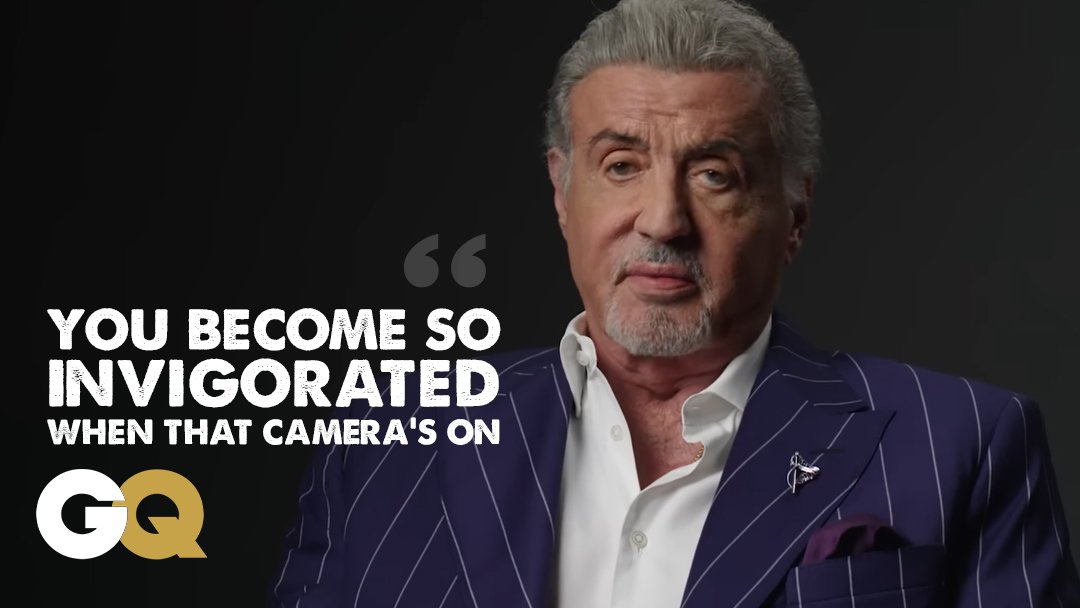
Based on GQ’s “Iconic Characters” interview.
The Larger-than-Life Career Before the Gloves
In GQ’s Iconic Characters series, Sylvester Stallone sat down to look back at a filmography that could fill a museum wing. Before he got to Rocky and Creed, he roamed through the wild terrain of his other roles—men who bleed, break, and keep fighting. From Vietnam to futuristic prisons and outlaw squads, his recollections were pure cinematic archaeology: every scar had a story.
Rambo: One of the First Pure Action Films
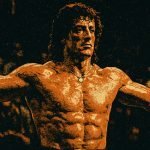
On Rambo, Stallone called it the best action film he ever made. “I consider it the best action film I’ve ever done,” he said. “And I think it might be one of the first pure action films. You’re speaking with your body, your looks, your intentions, while the other characters do the dialogue. You’re in action the whole time.”
Stallone revealed he was far from the studio’s first choice to play John Rambo. “I was the eleventh choice,” he said. “The original script is Rambo was a homicidal maniac with PTSD. He’s killed children. He killed fishermen, he was unmanageable, and then eventually had to be put to death by Trautman. This is not a very uplifting movie.”
He pushed to change that version of the story. “So I said, why don’t we give hope? That he tries to avoid fighting. He just wants to go away, let him go. And this sheriff, his ego is such that, I’m not gonna let this nobody get away. So it was all about this manifestation of false pride on the sheriff’s part.”
He also recalled a deleted subplot that deepened their rivalry. “They cut one thing out of the screenplay, I thought was a big mistake. The reason he hated Rambo so much, ’cause he had fought in the Korean War, and no one even thinks of the 35,000 people that died in the Korean War… So both of ’em had these complexes, but the sheriff was gonna fight his own war, the Korean War against Rambo. And so it was a personal weird vendetta and I wish they had kept that in.”
Predicting the Future with Demolition Man
On Demolition Man, he laughed at how close its “gentilization of society” came to modern reality. “It was a great movie,” Stallone said. “One of the few that really hangs up. Everything’s so meek now. Wesley [Snipes] was wild. He was at the top of his game.”
Stallone admitted he always felt there was more story left in that universe. “I wish we’d done a second and a third,” he said. “The world they built was incredible—way ahead of its time. I think people would’ve loved to see where those characters went next.”
Cobra: The Gothic Cop, the Catchphrase, and Brigitte Nielsen
On Cobra, Stallone described it as a stylized urban myth. “It was triggered by a squad of policemen in the forties and fifties called The Hats. They’d take care of business on their own. That’s where ‘You’re the disease, I’m the cure’ came from.” He said he wanted to make something like a gothic comic. “I think of it as Bruce Springsteen with a badge.”
His then-girlfriend Brigitte Nielsen co-starred, and Stallone remembered the production as intense but creatively electric, and, like Demolition Man, wishes he had built on it. “My biggest regret is that I didn’t do Cobra as a franchise,” he admitted. “Same with Tango & Cash and Demolition Man. Each had at least three movies in them. But I was too lazy.”
The Expendables: An Action Guys Rock Concert
On The Expendables, Stallone explained the concept came from watching an oldies concert. “I took my wife to see ten groups—The Righteous Brothers, The Young Rascals—and realized everyone was old, but people still showed up. I thought, if I bring all these old action guys back, that’s an event. Individually, nobody’s coming. Together, it’s a concert.”
The chemistry on set, especially with Arnold Schwarzenegger, was a mix of rivalry and mutual respect. “We’ve been competitive since we first laid eyes on each other,” he said. “Not always in the healthiest way. But now? Great frenemies.”
Cop Land: Gaining “pancake weight” to prove he could act
Stallone said he took Cop Land as a challenge to become an actor rather than an action star.
“At that time I was mainly relegated to a fellow who just did action film and relied upon his muscle and being in shape. And I said, I know there’s a lot more in there. So when the script came along with James Mangold, I had to actually divest everything that I had, which I was using for making a living, which is being in shape, to be an artist.”
He described how the role required a physical reversal. “And he was like, he’s really outta shape, and half hearing is gone. So it kind of put me in this kind of really vulnerable place. So that’s why I did it, for this big challenge.”
Stallone was specific about the major body transformation. “Yeah, you know, [I gained] like about 30, 35 pounds. But it wasn’t muscular weight, it was just pancake weight, you know? It was fun doing it, I’ll say that.”
The Underdog That Built a Legend
When the conversation finally turned to Rocky, Sly went back to the beginning. “I lived in Philadelphia when my parents got divorced,” he said. “I quit school at 15 and worked along the docks driving a forklift for my stepfather’s company.”
He remembered the grit and defeat in the city’s air. “Philly’s tough. Always has been. It’s the poor nephew of New York. It’s got a chip on its shoulder.”
When he sat down to write Rocky, he wasn’t chasing an Oscar. He was broke. “I’d written Paradise Alley, sold it for a hundred bucks, and I thought I’d blown it. That was my chance.”
Walking one night through Balboa Park, he stumbled on the seed of an idea. “Balboa—interesting, right?” he laughed. “I started thinking, maybe do a Mean Streets kind of thing. I wrote a story about a collector and Adrian. My wife [Sasha Czack] at the time said, ‘I don’t like it. I think Rocky’s mean.’ That triggered me. I realized he needed positive people around him—Apollo Creed, Mickey, Paulie. I went back, started writing like a madman. About 24 hours later, I had that pretty much down.”
Becoming Rocky Balboa
“I always fantasized about being a boxer,” he said. “Maybe not an inferiority complex, but a hero complex. I always wanted to come to the rescue.”
Training for the film changed him. “It changed my life as a man. I felt as though I was going into a world I didn’t know.” He spent weeks learning how to move like a fighter. “Every fight film before had missed the mark. They didn’t spend enough time learning the craft.”
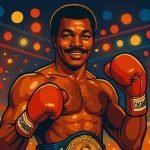
Then came Carl Weathers. “It was like two perfect dance partners,” Stallone said. “I was flatfooted, crude. He was on his toes. He’d never boxed, but he was such an athlete he could’ve been a real fighter. He was magical. He should’ve been nominated, especially for Rocky II and III.”
The Accidental Training Montage
Stallone and the team created the training montage from chaos. “There hadn’t even been a song written,” he said. “I told John [Avildsen], the director, everywhere we go that looks cinematic—railroad tracks, bridges—film me training. We don’t have a plan for a montage, but we’ll have footage.”
That footage became the most famous montage in film history. “I never did a one-arm pushup in my life. Just that one time I said, let me try it. Boom. You become so invigorated when that camera’s on. Like getting hit in the stomach with a medicine ball.”
He touched on the Rocky theme music too. “There was a song called Grounds for Separation by Hall & Oates. Then Bill Conti came along and turned it into Gonna Fly Now. The rest is history.”
Hall & Oates had recorded the track for their 1975 self-titled album, and its soulful tone reflected the gritty Philadelphia sound that Stallone grew up around. Conti’s 1976 theme took that same spirit and transformed it into cinematic triumph for Rocky’s character.
Rocky II and the Continuation of a Dream
Stallone knew Rocky II couldn’t be a rehash. “It was an actual continuation of one. Literally, there’s no time lapse. It’s right after he comes out of the ring.” He wanted the story to feel like a direct extension of the first film’s emotional rhythm, carrying the same bruises and unfinished business.
He explained that the sequel explored what happens after sudden fame. “He’s finally got a taste of success, but he doesn’t know how to live with it. That’s what made it work—it wasn’t about winning again. It was about identity.”
Stallone saw Rocky II as the true test of Balboa’s character—less about glory and more about who he becomes when the crowd goes home. Those two ideas, he said, kept the story honest and grounded in the same underdog spirit that made Rocky unforgettable.
Rocky III: When Success Becomes the Enemy
After the surprise triumph of the first two films, Stallone viewed Rocky III as a story about comfort dulling hunger.
“I thought of three, when you think you’ve actually accomplished something and you realize you’ve been carried and protected and insulated,” he said. “And that’s happened to so many people in their own lives. Like their parents love them so much, they don’t let them go out in the real world. And then when they do, they get demolished.”
He saw that theme reflected in fighters who lose their edge. “It’s happened a lot to fighters where you take easy fights, easy fights, easy fights. Time comes along where a killer shows up, boom.” That sense of awakening drove the film’s tone and climax.
“So I thought when Rocky’s on the beach, the scene with Adrian, maybe the best scene up to that time in all the Rockys where, ‘I’m afraid, I’m afraid, I don’t wanna lose what I got. I don’t wanna lose what I got.’ And that was, as you say, impactful.”
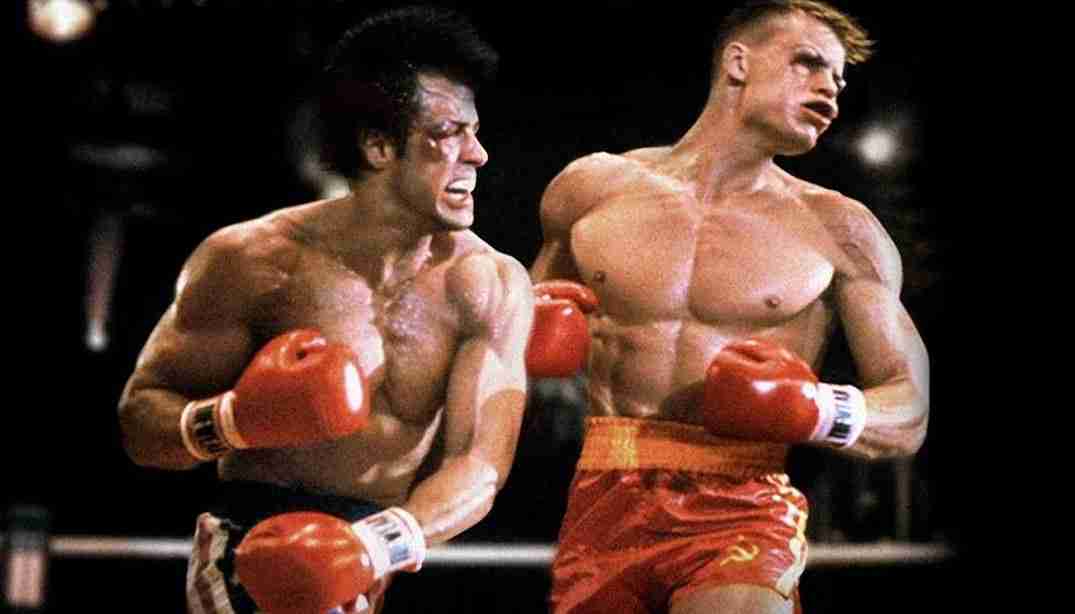
Then came the experiment that defined the film’s energy. “The other two [the fights with Mr. T as Clubber Lang], that was a very vindictive fight, and also an experiment. I didn’t want to go 15 rounds.… You have three rounds and after that you’re a dead man.… Studio goes absolutely not.… But it worked and it had to be done mathematically.… I took as many punches that would be in a 15-round Rocky fight and condensed all that punching into three rounds. So it was so manic and it worked.”
Creed: The Reluctant Resurrection
“I dodged that bullet for two years, three years,” he said about Ryan Coogler’s pitch. “I didn’t want to do it because the way he wrote it, Rocky dies. He gets Lou Gehrig’s disease.”
That idea actually dated back to 1990’s Rocky V. Stallone explained that Ryan Coogler’s original Creed script had a similar ending. “I didn’t want to do it because the way he had written it, Rocky dies, he gets Lou Garris disease,” he said. “And I said this, I have a big thing about characters like that dying. I’d much rather them get on a train going somewhere and you never see ’em again. But to die it will just bum the audience out completely.”
Once that was settled, Stallone dove in. “It was a lot of dramatic acting. I wasn’t fighting. That was a good challenge.”
He recalled filming a scene training in the ring with Michael B. Jordan that turned into something personal. “I started to dry heave and break down. He started crying for five minutes straight. The camera wasn’t even rolling. We just sat there bawling. It triggered something for both of us—tough upbringings, parental issues. I was the Rocky figure. He projected that maybe onto his own family. It affected him profoundly.”
Creed II and Saying Goodbye
“At the end of two,” Stallone said, “I say, ‘You don’t need me anymore. You’re on your own.’ That was passing the mantle.”
He saw it as closure. “It’s the same reason I couldn’t keep going back to Adrian. It was always, ‘Don’t fight, you’ll get hurt.’ Once she was gone, the story could move. Creed II did that too. It gave closure. It let the story evolve.”
Still Swinging: The Legacy Lives in Tulsa King
Even now, in Tulsa King, Stallone’s voice carries the same bruised optimism as Rocky Balboa’s. “It’s about heart and humor,” he said. “Being shipped somewhere at 75 years old with no friends, loneliness everywhere, basically sent there to die—and finding a reason to live again. That’s Rocky in a different suit.”
TV might be harder, faster, and “like getting jabbed every ten seconds,” but Stallone embraces it. “One season of Tulsa King equals five Rocky movies,” he said. “But that’s the fight. That’s what keeps me alive.”
The Enduring Underdog
Nearly fifty years after Rocky, Stallone still talks about him like an old friend. “Because Rocky really was a drama,” he said. “It was only six minutes of fighting. The rest was talking and acting.”
In this Sylvester Stallone interview, he reminds fans why the Italian Stallion endures. It isn’t about the win. It’s about the climb, the fear, and the refusal to stay down.
“I’m afraid,” Rocky once said on that California beach. “I don’t wanna lose what I got.”
That’s the heartbeat of every Stallone character—and maybe of Stallone himself.