Who is Jane Oliver?
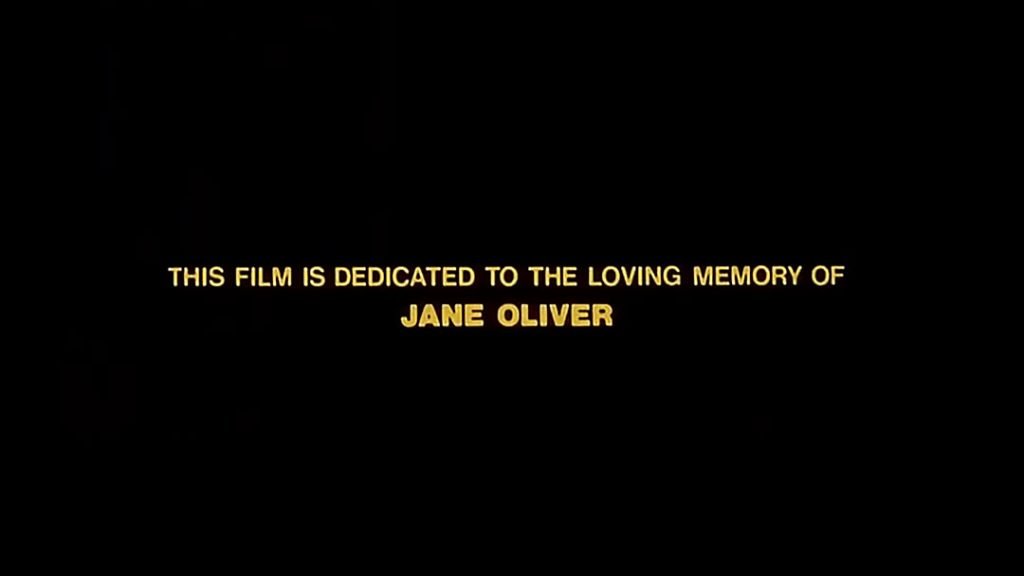
You’ll find her name quietly displayed in the final credits of Rocky II, Rocky III, Rocky IV, Rocky V, and Rocky Balboa. The message varies slightly from film to film, but the sentiment is always the same:
This film is dedicated to the loving memory of Jane Oliver.
There’s no explanation. No title. No role listed. Just a name.
And for years, fans have asked the same question: Who is Jane Oliver?
She’s never mentioned in the dialogue. She doesn’t appear in any scenes. Yet her name keeps appearing across the entire Rocky saga — from the early sequels to the final chapter of Stallone’s original run.
These tributes weren’t studio decisions. They were personal. Sylvester Stallone made sure her name lived on in the franchise that changed everything. For him, it was more than a thank-you — it was a lasting tribute to the woman who believed in him first.
Who Was Jane Oliver?
Jane Oliver, also known professionally as Jane Oliver Sherry, was a Hollywood talent agent and personal manager. More importantly, she was Sylvester Stallone’s first agent — and one of the few people who believed in him before Rocky ever existed.
In the early 1970s, Stallone was just an unknown actor struggling to get noticed. Jane Oliver saw something in him. Her client list was small, but it brimmed with rising stars — Susan Sarandon, Chris Sarandon, Perry King (Sly’s co-star in The Lords of Flatbush, 1974), and a young, determined Stallone.
She didn’t just represent him. She encouraged him. She helped guide his career when there was nothing glamorous or certain about it. Years later, Stallone would say,
“She basically found me when I was just a struggling actor and nobody believed in me.”
The Loss of Jane Oliver: A Personal Tragedy That Shaped Stallone
Jane Oliver passed away on June 3, 1977, just nine weeks and three days after Rocky won Best Picture at the Academy Awards. She died of cancer at Cedars of Lebanon Hospital in Los Angeles — a facility now known as Cedars-Sinai Medical Center.
She was only 46 years old.
Born on August 29, 1930, in New York City, Jane built a reputation in Hollywood as a sharp, instinct-driven talent manager who deeply believed in the people she represented. She married Valentine Sherry in 1970 and remained with him until her passing. Jane also had one daughter, Lynne Patricia Schorr.
Her death came at the very moment when the career she had helped build was reaching its peak. For Stallone, the timing was devastating. In interviews, he’s spoken with real emotion about how deeply her loss affected him.
“I went into this real dark place,” he said.
To cope, he didn’t just rely on his writing or acting — he turned to painting. One of the pieces he created during that time was later shared publicly, revealing just how much Jane meant to him beyond the professional relationship.
The timing and emotional weight of Jane Oliver’s passing draws a quiet parallel to actor John Travolta’s own early rise. In March 1977, just months before Saturday Night Fever would launch him into superstardom, Travolta lost actress Diana Hyland to cancer. She had played his mother in The Boy in the Plastic Bubble (1976) and was a major emotional influence in his life.
Although the nature of their relationships differed, both Stallone and Travolta suffered profound personal losses in 1977, right as their careers were breaking open — and in both cases, the person who had believed in them most never got to witness their full success.
Stallone’s Tribute Through Art
In 2017, in what marked the fortieth anniversary of Oliver’s death, Sylvester Stallone posted a striking piece of expressionist artwork on social media. He wrote: “I painted this the day my beloved manager, Jane Oliver, passed away… A wonderful woman.”
The painting is bold and emotional. It shows a stylized, golden figure holding a heart, offering it up with both hands. Above it looms a red and yellow abstract face, watching from the darkness. The background is a deep, almost suffocating black, split by sharp waves of crimson and red.
It’s raw. It’s symbolic. And it speaks volumes.
The figure’s heart-shaped offering may represent Stallone’s gratitude. The hovering face — possibly grief, possibly fate — gives the scene a weight that words alone can’t express. In many ways, the painting mirrors the exact story behind Rocky: a man struggling in the shadows, reaching for something bigger, holding on to belief when there’s nothing else.
A Career That Made a Difference
Jane Oliver’s name may not be widely known today. However, in the early 1970s, she was a rising force in Hollywood talent management. Her client list included Susan Sarandon, Perry King, and a then-unknown Sylvester Stallone.
Actress Susan Sarandon once mentioned that Jane’s small roster made her stand out — she wasn’t chasing trends. Instead, she focused on raw, untapped talent and fought to get them seen.
Stallone has credited her with changing the course of his life. She didn’t just help him get auditions — she pushed him to write, to take risks, and to keep going when no one else believed. Without her support, there may never have been a Rocky.
Why Her Story Still Matters
Even now, every time the Rocky theme swells and the camera pans across the steps of the Philadelphia Museum of Art, Jane Oliver’s presence lingers in the background. She may not appear on screen, but her belief in one struggling actor helped launch a story that would inspire millions.
The next time you watch a Rocky film, let the credits roll all the way through. Look for her name. Remember that behind every great underdog story, there’s often someone in the corner — someone who saw the fight before the rest of the world did.
For Sylvester Stallone, that person was Jane Oliver.
And thanks to him, her name is forever part of Rocky’s legacy.